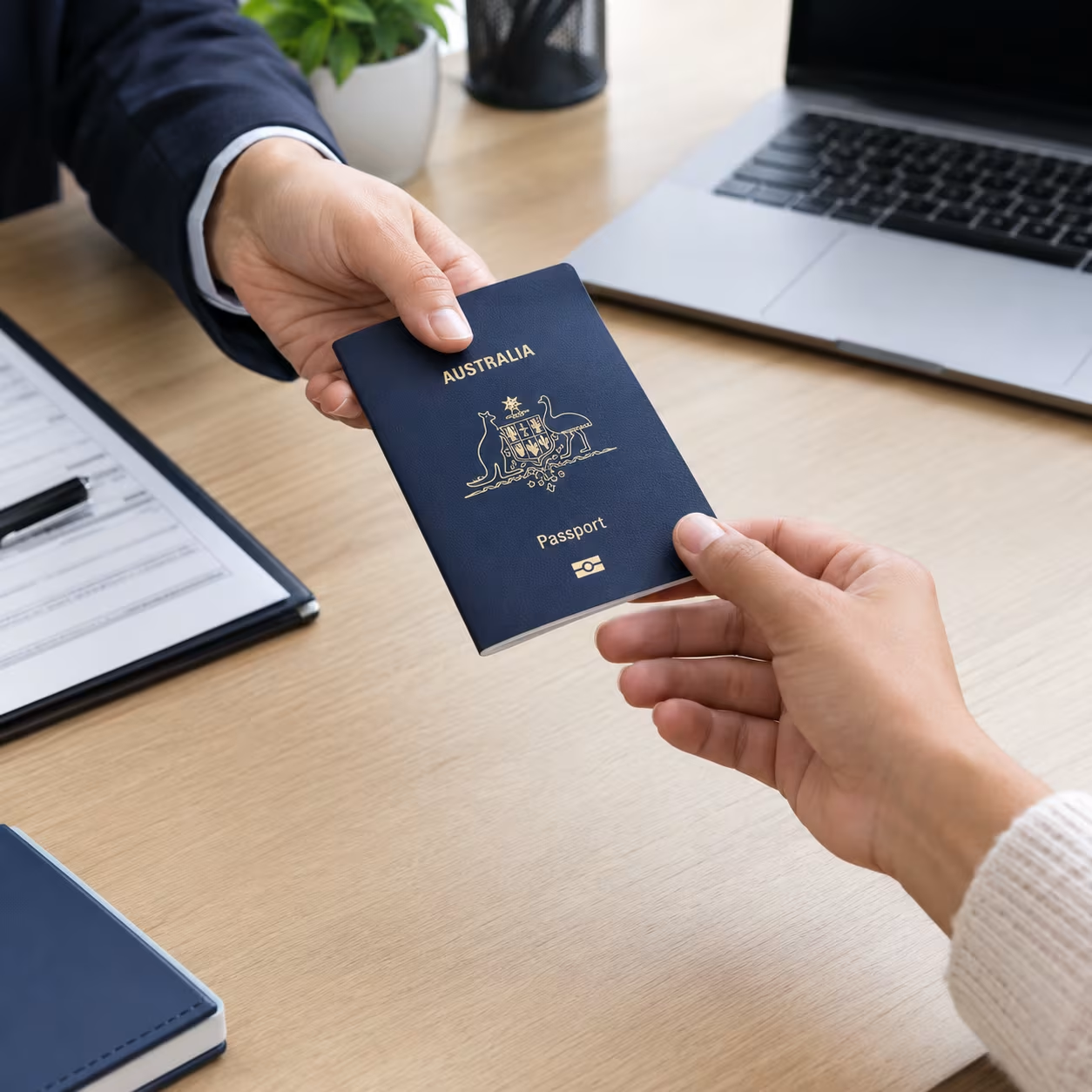
Are You Eligible for an Australian Partner Visa?
Check your Australian partner visa eligibility. This guide covers relationship types, sponsor requirements, health and character criteria.

You've found the person you want to spend your life with in Australia. But are you actually eligible for a partner visa?
Many couples discover eligibility issues only after lodging their application, losing both time and money in the process. Common stumbling blocks include not meeting the 12-month de facto requirement, overlooking sponsor eligibility criteria or misunderstanding what counts as a legal marriage under Australian law.
In this guide, we'll walk you through every eligibility criterion the Department of Home Affairs uses to assess partner visa applications.
Relationship Type: Which Relationships Qualify?
To have partner visa eligibility in Australia, you must be in one of the following relationship types with an Australian citizen, permanent resident or eligible New Zealand citizen:
- A marriage
- A de facto relationship
- A civil registered relationship
- An engagement (with marriage plans already in place).
Same-sex relationships are recognised in Australia, so you can apply for an onshore, offshore or prospective marriage partner visa if you're in a same-sex partnership.
What Is Considered a Legal Marriage?
Your marriage needs to be legally recognised by the Australian Marriage Act 1961. The basic conditions include:
- You're mutually committed to your spouse to the exclusion of all others
- You're able to prove your relationship is genuine and continuing
- You're either living together or don't live permanently apart
- You're not family related.
Your marriage must also be entered into voluntarily (not obtained by fraud or duress). Polygamous and underage marriages are not recognised.
Matilda Tip: Marriage certificates from local village leaders or religious bodies aren't typically recognised by the Australian Government. Provide documentation from the official government body where your ceremony took place.
What Is Considered a De Facto Relationship?
According to the Department of Home Affairs, a de facto relationship means:
- You have lived together for at least 12 months
- You're not married to your partner
- You're mutually committed to your partner to the exclusion of all others
- You're able to prove your relationship is genuine and continuing
- You're either living together or don't live permanently apart
- You're not family related.
The 12-month clock starts when you begin living together, not when you started dating. If you've been with your partner for 20 months but only lived together for five, you're only considered de facto for five months.
Exceptions to the 12-month rule:
- You couldn't cohabitate due to war, local laws or religious reasons
- You have dependent children with your sponsor.
Matilda Tip: If you've been living together for less than 12 months, start strengthening your application now. Open joint bank accounts, list each other as superannuation beneficiaries or register your relationship with your state government.
What Is a Civil Registered Relationship?
Entering a civil registered relationship can boost your eligibility, particularly if you don't meet the 12-month de facto requirement.
In most states and territories (except NT and WA), you can register your relationship with your local government. This provides additional documentation demonstrating your commitment.
What Is Considered a Valid Engagement?
If you're not in Australia and planning to get married, you could be eligible for a Prospective Marriage Visa (subclass 300), allowing you to enter Australia to marry your partner.
Requirements for engaged applicants:
- You and your fiancé have met in person since turning 18
- You can provide evidence of ongoing contact showing how your relationship developed
- You have plans in place to marry in Australia during your temporary visa period
- You meet all conditions for a legal marriage in Australia.
Matilda Tip: Provide a signed and dated Notice of Intention to Marry letter from an authorised marriage celebrant to demonstrate your marriage plans.
Proving a Genuine Relationship
Proving you're in a genuine relationship tends to be the most complex and time-consuming part of preparing a partner visa application. Our research shows it can take 100-200+ hours to collate, format and organise this evidence when DIYing. Even with a migration agent, applicants still spend 40-60 hours on this task alone.
To qualify, you need to show the Department of Home Affairs that you're in a genuine and continuing relationship of mutual commitment to the exclusion of all others. This means providing evidence across these four pillars:
- Financial aspects — joint bank accounts, shared mortgage or lease
- Nature of household — utility bills, mail addressed to both of you
- Social aspects — statements from friends and family, photos from events
- Nature of commitment — relationship statements, wills, future plans
You'll also need to prepare a relationship history statement detailing key milestones, including how you met, how your relationship developed and your plans for the future.
For step-by-step guidance on preparing this evidence, see our complete guide: How to Write a Compelling Relationship Statement for Your Partner Visa.
Sponsor Eligibility: Requirements Your Partner Must Meet
Sponsor eligibility is one of the most overlooked parts of the partner visa process. Your Australian partner must:
- Be 18 or older
- Be an Australian citizen, permanent resident or eligible New Zealand citizen
- Be permanently separated or divorced from any past partners
- Not have sponsored another person for a partner visa in the past five years
- Not have received a partner visa within the past five years (in most cases)
- Not have successfully sponsored two or more people for partner visas over their lifetime
- Not be married to someone else or if they were, prove this marriage has dissolved
- Meet Australia's health and character requirements.
Your sponsor also needs to provide police clearances for every country they've lived in for 12 months or more over the past 10 years.
Health Requirements
All visa applicants must meet Australia's minimum health standards and undergo a medical examination at an approved panel clinic.
Home Affairs is concerned about conditions that pose a significant healthcare cost (more than $86,000 assessed over the period of stay in Australia for temporary visa applicants and 5-10 years for permanent or provisional visa applicants) or put demand on services in short supply. This includes ongoing communicable diseases like tuberculosis or HIV and permanent or ongoing conditions.
Minor conditions like high blood pressure or chronic pain managed with inexpensive medication generally won't affect your eligibility.
If you don't meet the health threshold, you may be able to apply for a health condition waiver, although this adds complexity to your application.
Character Requirements
You'll be assessed against Australia's character requirements under section 501 of the Migration Act 1958.
This means you will need police clearances from each country you've lived in for 12 months or more over the past 10 years. A conviction with a custodial sentence of 12 months or more (even if suspended) could result in refusal. Minor offences like fare evasion generally don't impact eligibility.
Matilda Tip: The Australian Government will detect your criminal record, so always be honest and declare any past criminal behaviour upfront. Non-disclosure, even of minor offences, can lead to a three-year ban on further visa applications.
Other Eligibility Factors
- Age: You must be 18 or over
- Debt: You must not owe any debt to the Australian Government
- Current visa: You need to hold a substantive visa and not hold certain regional visas
- False information: Providing false information on a past application may bar you for three years
- Existing marriages: If you're married to someone other than your applying partner, you'll be ineligible.
Frequently Asked Questions
What if we've been together for years but only recently started living together? The de facto requirement is based on cohabitation, not total relationship length. Consider registering your relationship with your state government, getting married or waiting until you meet the 12-month threshold.
Can my partner sponsor me if they've sponsored someone before? Possibly, but they cannot have sponsored another person in the past five years, or more than two people over their lifetime.
Does my sponsor need to meet character requirements? Yes. Your sponsor must provide police clearances and meet Australia's character requirements.
Do I need to be in Australia to apply? No. Apply from outside Australia for an offshore partner visa (subclass 309/100) or prospective marriage visa (subclass 300), or from within Australia for an onshore partner visa (subclass 820/801).
Ready to Check Your Eligibility?
The key eligibility requirements to confirm before applying:
- You're in a qualifying relationship (married, de facto for 12+ months, civil registered or engaged)
- Your Australian partner meets all sponsorship criteria
- You both satisfy health and character requirements
Take our free eligibility quiz to see which partner visa pathway suits your situation. At Matilda, our team’s expertise will guide you through a successful visa application process, and we offer a money-back guarantee if your application isn't successful.
Employer sponsored visas
Our team is able to support clients with a variety of visa applications including:
Partner visa: Subclass 820 and 801 (onshore) or 309 and 100 (offshore)
Student visa: Subclass 500
Temporary graduate visa: Subclass 485
Employer sponsored visa: Subclass TSS482
Skilled independent visa: Subclass 189
Business innovation and investment visa: Subclass 188
We’re also able to assist with applications for Australian Citizenship.
Lorem ipsum dolor sit amet, consectetur adipiscing elit. Suspendisse varius enim in eros elementum tristique. Duis cursus, mi quis viverra ornare, eros dolor interdum nulla, ut commodo diam libero vitae erat. Aenean faucibus nibh et justo cursus id rutrum lorem imperdiet. Nunc ut sem vitae risus tristique posuere.